Hello readers,
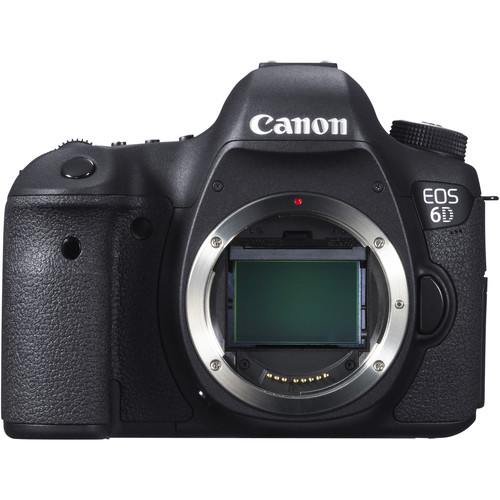
As you know the world of photography is changing rapidly with the addition of full frame cameras at (what once was) crop sensor prices. Specifically, the Canon 6D was recently announced, along with the Nikon D600 just a few weeks before it. I primarily shoot Canon, so I cannot comment on the Nikon D600 really, but I did want to give you my opinion on how both of these cameras are changing the field.
I currently use a 5D Mark ii for my stock images. I was tempted to upgrade to the 5D Mark iii when it was announced, but after careful consideration, I did not feel the upgrades would help me with the type of photography I enjoy (Stock and landscapes). The 6D, although not an improvement over the 5D Mark ii in many areas, sounds like it could be decent as a slight upgrade, ASSUMING that the Image Quality (IQ) is improved from the 5D Mark ii.
Since I shoot stock, the burst frame rates, the better AF and the increased Dynamic Range of the 5D Mark iii would just be overkill for my craft (at it's price, anyways). A 6D though, with built in wifi to get my images to my computer without an adapter, and better ISO performance, and (possibly) better IQ, may be just what the doctor ordered for me personally.
We'll have to wait for real world reviews of this new wonder camera to see if it is an improvement over the massive game-changer that was the 5D Mark ii. Until then, we can only speculate (and speculate we shall!). But if it is an improvement, I could see the benefit of upgrading.
Just my 2 cents.
-David
PHOTOGRAPHER RESOURCES:
Links to other useful websites
Showing posts with label Canon. Show all posts
Saturday, October 27, 2012
Thursday, March 1, 2012
Canon 5D MARK III (5Dm3) SOON?
The day is finally here folks! It seems that March 2nd, 2012 will be the announce date for the Canon 5D Mark III.
Check out Canon Rumors for more info: http://www.canonrumors.com/
Tech List/Description:
Unsurpassed Image Quality
22.3 Megapixel Full Frame CMOS sensor
DiG!C 5+ Image Processor
ISO 100-25600 (expandable to L:50 H1:51200, H2: 102400
Full HD Movie (ISO 100-12800 (H:25600)
High Performance Operation
61-point high-density reticular AF (up to 41 crosstype points)
6.0 fps for high continuous shooting
Intelligent viewfinder with approx. 100% coverage
3.2-type, approx.1.04m dot (3:2 wide) Clear View LCD II
iFCL metering with 63-zone dual-layer sensor
Shutter durability of 150,000 cycles
High end features
Silent & low vibration modes
Dual card slots (CF & SD)
High Dynamic Range (HDR) Mode
Multiple Exposures
Comparative Playback function
Improved durability & water and dust resistance
SPECIFICATIONS
Available Colours – Black
Megapixels – 22MP
Sensor Size – 36 x 24mm
ISO/Sensitivity – 100 – 25600
Autofocus Points – 61 points
Lens Mount – Canon
LCD Size – 3.2″
Liveview – Yes
Viewfinder – Optical TTL
Min Shutter Speed – 30 sec
Max Shutter Speed – 1/8000 sec
Continuous Shooting Speed – 6 fps
Self Timer – 10 sec, 2 sec
Metering – Centre-weighted, Spot, Evaluative, Partial
Video Resolution – Full HD 1080
Memory Type – Compact Flash
Connectivity – USB 2, HDMI, Mic Input, Wireless (optional)
Battery – LP-E6
Battery Type – Lithium-ion
Charger – Includes Li-Ion Charger
File Formats – AVI, RAW, H.264, MOV, MPEG-4
Dimensions – 152 x 116 x 76mm
Box Contents – Battery Pack LP-E6 .. Battery Charger LC-E6 .. AV Cable AVC-DC400ST .. Interface Cable IFC-200U .. Eyecup Eg .. Wide Strap EWEOS5DMKIII .. CR1616 Lithium Battery+
This camera sounds like a dream come true for Microstock Shooters in general. Pricing is slated at an approximate $3500 US Dollars, so this won't be a purchase to take lightly here folks.
Now, the honest truth. Do you NEED this camera for microstock? You do not. I guarantee it. Will it be nice? Of course. A Canon D60 though will get the job done and so will a Canon 7D. Remember, I'll say this time and time again, it is NOT the camera, its the photographer. If you take your time and pace your shots, you can get the shot you want without fancy gear.
That being said... I want this one, bad.
Check out Canon Rumors for more info: http://www.canonrumors.com/
Tech List/Description:
Unsurpassed Image Quality
22.3 Megapixel Full Frame CMOS sensor
DiG!C 5+ Image Processor
ISO 100-25600 (expandable to L:50 H1:51200, H2: 102400
Full HD Movie (ISO 100-12800 (H:25600)
High Performance Operation
61-point high-density reticular AF (up to 41 crosstype points)
6.0 fps for high continuous shooting
Intelligent viewfinder with approx. 100% coverage
3.2-type, approx.1.04m dot (3:2 wide) Clear View LCD II
iFCL metering with 63-zone dual-layer sensor
Shutter durability of 150,000 cycles
High end features
Silent & low vibration modes
Dual card slots (CF & SD)
High Dynamic Range (HDR) Mode
Multiple Exposures
Comparative Playback function
Improved durability & water and dust resistance
SPECIFICATIONS
Available Colours – Black
Megapixels – 22MP
Sensor Size – 36 x 24mm
ISO/Sensitivity – 100 – 25600
Autofocus Points – 61 points
Lens Mount – Canon
LCD Size – 3.2″
Liveview – Yes
Viewfinder – Optical TTL
Min Shutter Speed – 30 sec
Max Shutter Speed – 1/8000 sec
Continuous Shooting Speed – 6 fps
Self Timer – 10 sec, 2 sec
Metering – Centre-weighted, Spot, Evaluative, Partial
Video Resolution – Full HD 1080
Memory Type – Compact Flash
Connectivity – USB 2, HDMI, Mic Input, Wireless (optional)
Battery – LP-E6
Battery Type – Lithium-ion
Charger – Includes Li-Ion Charger
File Formats – AVI, RAW, H.264, MOV, MPEG-4
Dimensions – 152 x 116 x 76mm
Box Contents – Battery Pack LP-E6 .. Battery Charger LC-E6 .. AV Cable AVC-DC400ST .. Interface Cable IFC-200U .. Eyecup Eg .. Wide Strap EWEOS5DMKIII .. CR1616 Lithium Battery+
This camera sounds like a dream come true for Microstock Shooters in general. Pricing is slated at an approximate $3500 US Dollars, so this won't be a purchase to take lightly here folks.
Now, the honest truth. Do you NEED this camera for microstock? You do not. I guarantee it. Will it be nice? Of course. A Canon D60 though will get the job done and so will a Canon 7D. Remember, I'll say this time and time again, it is NOT the camera, its the photographer. If you take your time and pace your shots, you can get the shot you want without fancy gear.
That being said... I want this one, bad.
Tuesday, April 26, 2011
Best Canon Lens for Microstock
100 if not 1000 searches are conducted a day for the answer to the above question: "What is the best Canon lens for Microstock".
Ahhh, a difficult question, with no real answer. Microstock is just the selling of the images to a company. the TYPE of images you create are completely upto you. And the lens you need is directly related to the type of images you plan to make.
For example, lets say you desire to shoot nature footage and photos for microstock because you love hiking and nature and own a nature reserve or live near the forest. You would have very different needs from a microstock photographer wanting to submit food photography, created in his studio. Because what you specifically want to shoot makes the subject matter vary, it is an impossible question without knowing what you, the reader, specifically wants to shoot.
What we can do is go over the lenses from each category, in a rough over-view. First, we'll divide lens types into 2 categories: Studio/Travel. Studio involved prepared shots, in prepared light, with controlled environments. Where as travel involves outdoor photography in exotic locations.
Also keep in mind that this is a list of the creme' of the creme' so to speak. This list is not cheap, this list is not easy to come by, this list is for a serious photographer, it's expensive, but it has some of the best glass that is still consumer grade.
STUDIO: Food/Macro
For close up food photography and/or Macro photography, there are 2 lenses that are spoken of repeatedly!
Tamron 90mm/2.8 Macro
: A very sharp lens especially at the price point, with image stabilization to boot. Useful in food and macro photography since it is sharp in the middle and a 1:1 magnification with a Fstop of 2.8 for very shallow DOF when desired.


Canon 100mm/2.8L IS
or Canon 100mm/2.8 non-IS
: Both offer amazing optics, the difference being IS (Image Stabilization) and about 500$. You cant go wrong with either one really.

Note that both of these lenses can also be used for portraits, but its really in the Macro world where they shine.
STUDIO: Models/People
There are a few lenses here that are "staples" of this area of photography, including a telezoom that some may have overlooked for "studio" work.
First, I'll mention that a Prime lens is amazing in a controlled environment. As such, we'll discuss the 50mm 1.8
Canon EF 50mm f/1.8
: This bad boy is one lens that I recommend EVERYONE get, it's cheap cheap cheap and allows for a very shallow DoF when wide open. It is not sharp when fully open, but stopped down to 2.8 or so and it becomes a fairly competent lens with many options! Not a zoom, this will require your feet to "zoom" in and out, because it is a prime lens.
Next we'll discuss the Canon EF 24-70mm f/2.8L:
This lens is considered to be a great studio lens for many reasons. It is sharp as a razor and has great contrast. It's "downfall" if you will is no IS, in reality though, it may not be a necessary thing to have for *most* studio setups, since your model and "lifestyle" shoots dont usually have your models swinging through the air, nor running 30 yard sprints.
Lastly, I'd like to mention the 70-200mm Canon f/2.8 IS ii
Telephoto: This lens is amazing in contrast and
background compression. It is used very often for headshots and for outdoors work for its ability to compress the background and create a creamy texture despite being at a "stopped down" f-stop. The lens provides very acceptable images at f/2.8 though and will be a God send in a low light shooting environment where distance is unchangeable.
TRAVEL: Walking Lens
A walking lens is basically a lens that is acceptable for a wide range of applications and uses, with little compromise to Image Quality. There is one favorite in this category. The Canon 24-105mm f/4L IS
is a great lens with an acceptable and convenient zoom length. It includes IS for necessary moments and low light shooting and has great image quality!
TRAVEL: Wide Angle Lens
Landscapes and panoramas your thing? You want to take an HDR of the swiss alps? Maybe a panorama of the grand canyon? You'll need a wide angle lens (or want one, at any rate) to take in as much of the scene as you can. You can go fish-eye (but the distortion is significant), but sticking no distortion free we have one clear winner that even topples the Canon version, in my book. The Tokina 11-16mm f/2.8 ATX lens
. The lens is superior to the Canon version, in that it has a 2.8 aperature throughout the whole range, where as the Canon version is 3.5-5.0fstops. This lens can go from wide to slightly less wide, to accommodate both Crop sensor and Full Frame Cameras. Great sharpness and contrast, a must for the landscape aficionado!
TRAVEL: Wildlife Lens
This area is for the stock photographer interested in Lions, Tigers, and Bears (Oh My!). The same lens I mentioned above, the 70-200mm Canon f/2.8 IS ii
Telephoto is where you want to be here. Yes there is a 300mm lens... yes it has good optics *(not the 75-300mm f/3.5-5, those optics are fairly bad!)*, but the cost is very high on the 300mm good telephoto. A better option here is to add a Canon EF 1.4x iii Extender
. It adds length to your lens at a very small quality cost. A 2.0X version exists, but it will not be as good in the quality department.
-David
Ahhh, a difficult question, with no real answer. Microstock is just the selling of the images to a company. the TYPE of images you create are completely upto you. And the lens you need is directly related to the type of images you plan to make.
For example, lets say you desire to shoot nature footage and photos for microstock because you love hiking and nature and own a nature reserve or live near the forest. You would have very different needs from a microstock photographer wanting to submit food photography, created in his studio. Because what you specifically want to shoot makes the subject matter vary, it is an impossible question without knowing what you, the reader, specifically wants to shoot.
What we can do is go over the lenses from each category, in a rough over-view. First, we'll divide lens types into 2 categories: Studio/Travel. Studio involved prepared shots, in prepared light, with controlled environments. Where as travel involves outdoor photography in exotic locations.
Also keep in mind that this is a list of the creme' of the creme' so to speak. This list is not cheap, this list is not easy to come by, this list is for a serious photographer, it's expensive, but it has some of the best glass that is still consumer grade.
STUDIO: Food/Macro
For close up food photography and/or Macro photography, there are 2 lenses that are spoken of repeatedly!
Canon 100mm/2.8L IS
Note that both of these lenses can also be used for portraits, but its really in the Macro world where they shine.
STUDIO: Models/People
There are a few lenses here that are "staples" of this area of photography, including a telezoom that some may have overlooked for "studio" work.
First, I'll mention that a Prime lens is amazing in a controlled environment. As such, we'll discuss the 50mm 1.8
TRAVEL: Walking Lens
TRAVEL: Wide Angle Lens
TRAVEL: Wildlife Lens
+-----+------+-----+-----+-----+
I hope this list has been helpful! In the meantime, happy shooting and remember, it's not the gear that makes the photographer.... its the skill/talent. Even horrible cameras can produce amazing results in the hands of an expert. That said though, the glass is the most important part of any photographers arsenal, know what you need and if you are unsure, i HIGHLY recommend renting for a week, to see if the lens fits your needs before you buy. A great place to rent is http://www.lensprotogo.com/! Quality rentals!-David
Subscribe to:
Posts (Atom)